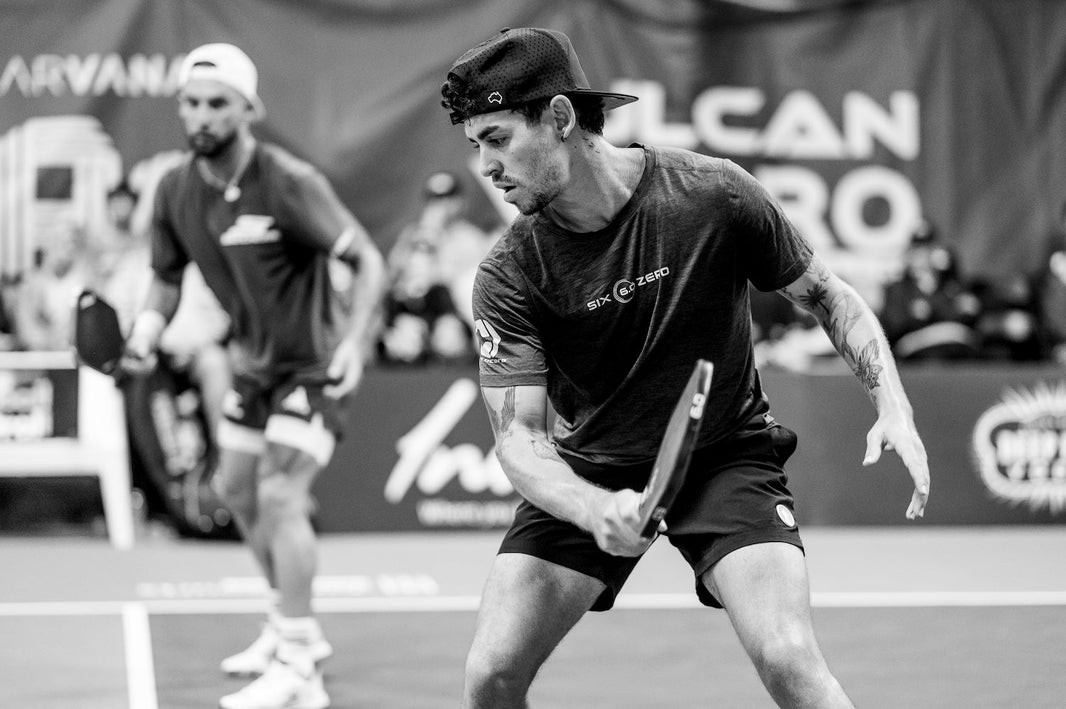
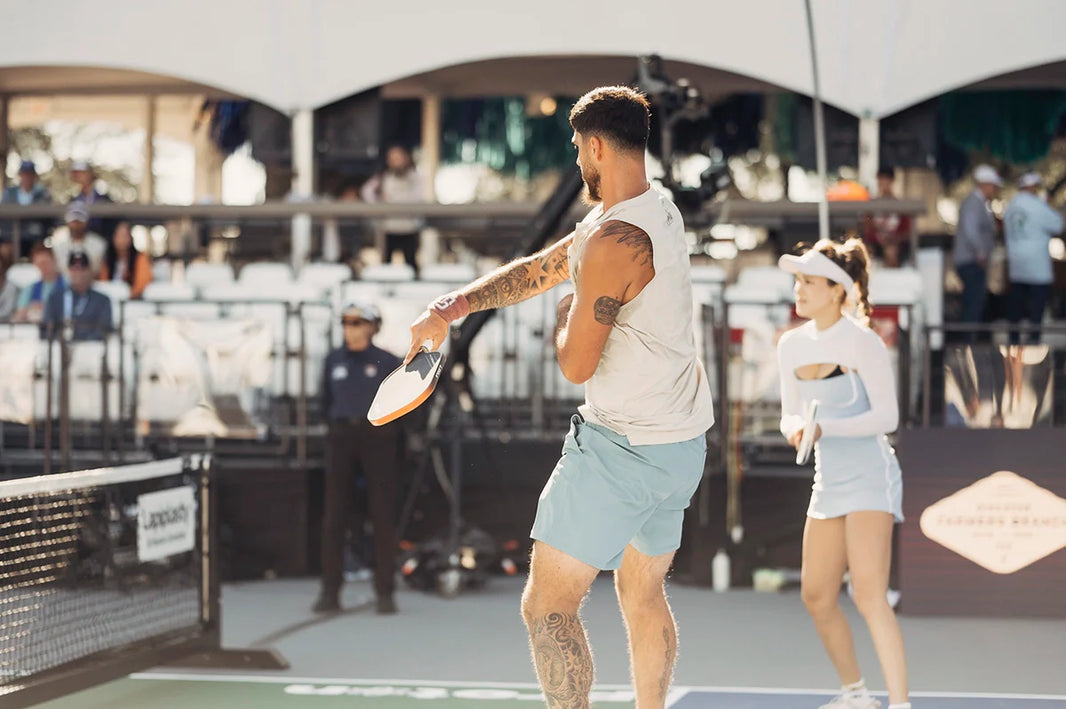
Most pickleball and tennis players believe that squeezing the handle tighter gives them more control.
In reality, the opposite is often true.
Excessive grip pressure is one of the most common — and least recognized — problems in racquet sports. It affects control, touch, reaction speed, comfort, endurance, and even injury risk.
The problem is that most players are not consciously aware they are doing it.
They simply adapt to instability, vibration, sweat, or lack of confidence in the handle by squeezing harder.
Over time, this becomes automatic.
Your Brain Wants Stability
From a biomechanical perspective, the human hand is designed to stabilize objects through feedback and pressure distribution.
When the brain perceives that an object may slip or rotate, muscle activation increases automatically.
This is called a protective neuromuscular response.
In racquet sports, this happens when:
The body reacts by increasing grip force.
The player usually does not notice it happening.
Why More Tension Often Reduces Control
At first glance, gripping tighter sounds logical.
But high grip tension creates several performance problems.
1. Reduced Fine Motor Control
The muscles of the hand and forearm work best when they are responsive and relaxed.
When excessive tension is present:
This is especially noticeable during:
Many players describe this as “feeling stiff” or “losing touch.”
2. Faster Forearm Fatigue
Constant muscular contraction consumes energy.
The harder a player squeezes:
This creates a negative cycle:
Fatigue → Instability → Tighter Squeezing → More Fatigue
Late in matches, many players are not losing control because of technique.
They are losing control because their hand and forearm are overloaded.
3. Increased Stress on the Hand, Wrist, and Elbow
When grip tension increases, impact forces are transmitted more directly through the kinetic chain.
Instead of allowing the hand to absorb and distribute forces naturally, the muscles remain rigid.
This may contribute to:
While many factors influence overuse injuries, excessive grip pressure is commonly associated with increased muscular strain in racquet sports.
The Problem With Traditional Round Handles
Most traditional racquet and paddle handles are fundamentally round with relatively flat bevel transitions.
This design has existed for decades.
The issue is that round handles provide limited tactile reference points for the hand.
As a result:
In simple terms:
When the hand does not feel secure, the body compensates by squeezing harder.
Why Sweaty Hands Make Everything Worse
Sweat changes friction.
As moisture builds:
This is why many players notice themselves squeezing hardest:
The body prioritizes security over efficiency.
Elite Players Often Look Relaxed for a Reason
Watch high-level players closely.
Their swings are explosive, but their hands often remain surprisingly relaxed between impacts.
This is not accidental.
Efficient players try to maintain:
The goal is not zero grip pressure.
The goal is appropriate grip pressure.
Enough to maintain stability and confidence — without unnecessary muscular tension.
The Importance of Ergonomics
Ergonomics influence how naturally the hand interacts with the handle.
A handle that improves:
may help reduce the tendency to overgrip.
This is one reason ergonomic grip systems have gained attention in modern racquet sports.
When the hand feels more connected and secure, many players naturally relax their grip pressure without consciously trying to.
Signs You May Be Gripping Too Hard
Many players do not realize they are overgripping until symptoms appear.
Common signs include:
Final Thoughts
In racquet sports, control is not created only through force.
It is created through efficiency, stability, feel, and confidence.
The body naturally increases grip pressure when it perceives instability or lack of feedback.
Understanding this relationship is important because many players spend years trying to improve technique, while overlooking one of the most fundamental connections between the hand and the paddle.
Sometimes, better control starts with learning how to use less tension — not more.